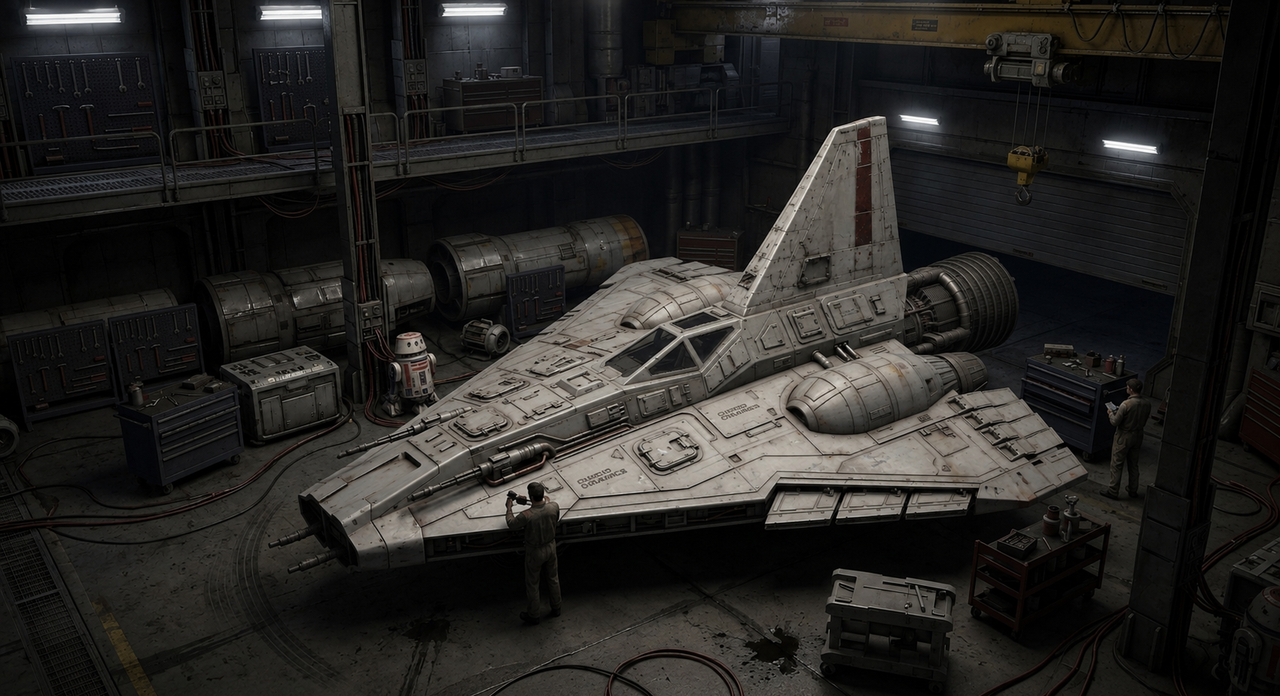
Omake: PER-C Light Duty

Yacov
I trust you know where the happy button is?
- Joined
- Jan 1, 2021
- Messages
- 617
- Likes received
- 11,003
Omake: PER-C Light Duty
Production Information
Manufacturer: Cushions Express (subsidiary of the Imperial Guild of Commerce, Production, and Protection)
Model: PER-C Light Duty
Type: Light duty scout ship
Cost:
Technical Specifications
Length: 8 meters
Width: 12 meters
Height: 2.25 meters
Engine unit(s): 2 Hoersch-Kessel ion drives
Maximum atmospheric speed: 900 km/h
Hyperdrive: none
Shielding: decent civilian grade shield generator
Power: civilian grade fusion generator
Hull: titanium hull
Sensors: medium range sensors outside of the holocam system
Armament:
Crew: 2
Passengers: Up to 2
Cargo Capacity: 200 kg, more if the two passenger seats are removed
Life Support: high quality
Consumables: 5 days
Other systems:
Usage
Availability: Licensed
Roles:
Affiliation:
Description
"And if you look on the left you will see a lovely view of the valleys just outside of Edinspire." - Highreach Canyon Tours pilot giving an update during their civil tour flight.
The PER-C is a light duty small craft designed for low priority scouting missions and other non-combat operations. This starship has maintained an untainted reputation despite being manufactured and utilized by the Galactic Empire. The PER-C also enjoys a niche in the civilian market as a touring and racing ship with its unarmed civilian variant.
Procurement History
"We don't need another TIE or some hanger queen. We just want an affordable ship that can do a quiet patrol and get back to base with minimal chance of issues." - Wording of the procurement officer when discussing their requirements.
At the dawn of 2 ABY the Myto sector was facing a starfighter frame shortage. The uptick in piratical activity proved to be increasingly more severe throughout the sector. Sector and system forces responded by building and refitting more TIEs to frontline postings. Things were getting so bad some system navies were resorting to plundering outdated Y-wings from local salvage yards.
This increasing frontward facing focus would have its consequences however. Low priority patrol routes were left undersupplied as flights that were flown by the TIE Light Duty lagged behind or were not flown at all as anti-pirate patrols kept being given greater priority. Using shuttles proved nonviable as they were required for an ever increasing amount supply runs and requests for Viper probe droids were denied as sectors with significant Rebel activity were deemed higher priority.
The issue was made startlingly clear when a pirate raid surprised a remote research facility on the world of Quxitol, making off with substantial quantities of scientific equipment. This brazen attack was a wake up call and the a short term procurement contract was put out for a ship design to perform non-combat missions until the situation calmed down or production of other platforms could be increased.
Representatives of major shipbuilding firms such as Kuat and Seinar did not even bother to respond to the contract. They saw it as too short term and limited in scope to invest the capital into. A design that would only be in limited production for a few years was considered not worth their time and the effort of retooling production when demand for more profitable designs was at an all time high. This left the military contract up for grabs for smaller players, and eventually it reluctantly fell into the hands of Cushions Express, a civilian ship manufacturer within the IGCPP.
Design
"Would I want to fight in a PER-C over a TIE? No. Would I want to fly a long patrol without combat in a PER-C over a TIE? Definitely." - Imperial pilot comparing the amenity differences of a PER-C and a TIE.
Cushions Express built their designs with crew comfort and reliability in mind and the Peripheral Environment Reconnaissance Craft, or PER-C for short, continued in this design philosophy. A relatively large amount of Credits were spent on pilot comforts as compared to a standard TIE. Comfortable seating for long flights that the company also put in its civilian designs, a wide canopy for viewing with your eyes instead of relying mostly on sensors, enhanced stabilizers for long flights, and a more spacious and pressurized cockpit with enhanced temperature controls to be able to take off your pressurized helmet mid flight for some fresher temperate air. It got to the point that some the procurement committee tried to argue the pilot amenities were excessive and could potentially damage discipline. However Cushions Express managed to lower the price enough due to already having the supply chains set up for other projects that those concerns were dismissed.
The shape of the PER-C was more wide than long with most of that width taken up by the wings. Its two engines were placed next to the body of the plane rather than the tips of the wings. Once again there was some pushback citing the ship would not fit in hangars designed for the smaller TIEs. However it was pointed out that these bases were already suffering from a ship shortage and most were designed to fit Lambda shuttles, so finding space for the wider ship shouldn't be an issue.
The most technically sophisticated piece of equipment in the PER-C was a 57C holocam modified to take reconnaissance holographic images. The military grade holocam was installed in the bottom of the craft and could be retracted back into the body to avoid damaging it. Those high detail images could be transmitted back to base from hundreds of kilometers away for current or later review on a holoprojector. This was often enough for simple patrols from back line bases in low conflict areas.
Unfortunately commissioning a company that primarily manufactured civilian ships for a military project did have its drawbacks. Outside of the holocam, Cushions Express did not have the access or clearance for most other military grade technologies and components. This resulted in the PER-C being composed primarily of civilian technologies such as the propulsion being two Hoersch-Kessel ion drives instead of a more militarized drive like the twin ion engine and a weaker laser cannon than a L-s1. Even if such components were available, the power draw from the long range data transmitter and the shields meant that the PER-C would be unable to power more powerful weapons or engines with its standard power generation. This resulted in a ship that was evaluated as overall weaker than the starfighter it was replacing in terms of speed and combat performance.
There were efforts by buyers to enhance the combat utility of the PER-C. One common post-purchase modification was to remove most of the holocam compartment and replace it with a rather anemic bomber bay. This change made a PER-C capable of launching a small barrage of unguided bombs all at once downwards relative to the craft via a simple repulsor installed in the top of the bay. Enough firepower to soften up the defenses of a small town or an unfortified criminal hideout for the ground troops. Its electronics systems modified for calculating targeting solutions rather than for scouting purposes. The removal of the long range data transmission capability allowed for the laser cannon to be upgraded to an L-s1 bringing this variant up to half the fighter-to-fighter firepower of a standard TIE/ln. This turned the PER-C into a below mediocre fighter-bomber for formations struggling to source better bombers such as TIE Bombers or decades old Y-wings to destroy hard targets.
However this poor combat potential did little to dissuade the PER-C's designers in making the best ship they could. Rather than bemoan their lack of access to most of the military supply chain, they turned it to their advantage. In parallel with the military PER-C development, Cushions Express worked on a civilian export model with the military components and weaponry removed and the military grade holocam changed out for a civilian one. This civilian model would swap reconnaissance flights and supply runs for civil touring and in-system courier contracts.
The heavy use of widely available civilian components in both models allowed the production lines to be swapped between the two fairly quickly as needed. Given the temporary nature of the production contract and the low evaluation of the ship, the Imperial government turned a blind eye to this practice. Labeling it as an acceptable cost of acquiring a solution to their temporary shortage from the civilian sector.
Typical Pilots
"You can't be mad at someone for winning a race in a PER-C. It is just too respectable." - A common saying in the racer community.
The PER-C is a starship that straddles two worlds. On one side it is expected to operate in a military setting and keep consistently performing even under less than ideal conditions. On the other side it was also designed to be appealing to a private consumer who wants to be comfortable and enjoy the activity of flying. This is expressed in the two kinds of pilots that the PER-C is known for.
First are those pilots that tend to fly the military and unmodified civilian models. These pilots tend to be on the older side with a reliable, mature nature. They don't fly for glory or the adrenaline of combat, but rather to earn a paycheck and support whatever dependents or long term expenses they have. While none of them are ace pilots, they have a reputation for consistent performance with lower instances of burnout and volatility from continuous flights than average. Nevertheless when backed into a corner they can often prove deceptively skilled at evading enemy fire and keeping their cool.
The second kind of pilot the PER-C attracts are amateur starfighter racers. They take advantage of the export models' cheap price and generous space to modify it to their personal tastes and turn it into a racing starfighter. Racers would often shave down the wings and convert the space meant for passengers and cameras into a bigger reactor and more thrusters. While these variants are not good enough to compete with starfighters specially designed for the sport, the PER-C is a decent option for beginner racers who have yet to attract a sponsor. These pilots are often amateurs in it for the fun of the sport and value comfort and enjoyment over peak performance. They might not always be at the podium, but they tend to always have drinking buddies at the afterparty.
Conclusion
"Flying in my PER-C is all I can do these days with my bad back, but I wouldn't trade the feeling of taking to the skies for anything." - Retired Imperial pilot in an interview following his honorable discharge.
The PER-C at its core is a workhorse more than a warhorse or a racehorse. Designed for those who military pilots who have lost the taste for glory, but still have the desire to fly whether for duty, adventure, or just to pay the bills. It might not be high spec, but it can certainly do the lazy low priority patrols while the real dogfighters go off and fight pirates, Rebels, and other things that will try to kill them. Yet the second life in the civilian market proved it had worth beyond the short lived contract it was designed for.
——
Figured with all the TIEs getting converted to better and more expensive refits, something had to take its place for all the not shooting stuff. For all the focus on high spec top of the line fighters, a no nonsense basic aircraft to handle non-combat military flights outside of logistics is also essential in any sane air force. And no, suicide sleds where all the corners deemed unnecessary are cut for mass production like the standard TIE don't count. There is a difference.
Inspiration for this one is the Percival Vega Gull, a British wood and fabric plane produced in the latter half of the 1930s and was retired in 1945. It had a respectable service record in both civilian and military aviation history that didn't revolve around killing people. Which is impressive considering what was happening in the 30s and 40s. Inspiration for the shape came from the Northrop XP-79. A failed plane design built in 1945 that I feel captures the logic and whimsy that Star Wars' ships are known for. Look at it and tell me it wouldn't fit in a Star Wars starport or fleet overlook scene. I ended up giving it the Percival's body length so it could fit the 4 people for the civil touring role.
Crossposted on SB and SV
Production Information
Manufacturer: Cushions Express (subsidiary of the Imperial Guild of Commerce, Production, and Protection)
Model: PER-C Light Duty
Type: Light duty scout ship
Cost:
- 52,000 credits new (military model)
- 42,000 credits new (civilian export model)
Technical Specifications
Length: 8 meters
Width: 12 meters
Height: 2.25 meters
Engine unit(s): 2 Hoersch-Kessel ion drives
Maximum atmospheric speed: 900 km/h
Hyperdrive: none
Shielding: decent civilian grade shield generator
Power: civilian grade fusion generator
Hull: titanium hull
Sensors: medium range sensors outside of the holocam system
Armament:
- Standard military model
- 1 laser cannon
- Civilian model
- None
- Modified fighter-bomber model
- 1 L-s1 laser cannon
- Small bomber bay
Crew: 2
- 1 pilot
- 1 reconnaissance specialist
Passengers: Up to 2
Cargo Capacity: 200 kg, more if the two passenger seats are removed
Life Support: high quality
Consumables: 5 days
Other systems:
- Wide canopy
- Comfy seats
- Enhanced stabilizers
- Enhanced internal thermal regulation
- 57C holocam
- Longe range data transmitter
- "Piercing Wail" model distress beacon
Usage
Availability: Licensed
Roles:
- Reconnaissance
- Non-combat military duties
- Military trainer
- Racing starfighter
- Civil touring
Affiliation:
- PDFs
- Fourth line military formations
- Low ranking starfighter racers
- Civilian touring companies
Description
"And if you look on the left you will see a lovely view of the valleys just outside of Edinspire." - Highreach Canyon Tours pilot giving an update during their civil tour flight.
The PER-C is a light duty small craft designed for low priority scouting missions and other non-combat operations. This starship has maintained an untainted reputation despite being manufactured and utilized by the Galactic Empire. The PER-C also enjoys a niche in the civilian market as a touring and racing ship with its unarmed civilian variant.
Procurement History
"We don't need another TIE or some hanger queen. We just want an affordable ship that can do a quiet patrol and get back to base with minimal chance of issues." - Wording of the procurement officer when discussing their requirements.
At the dawn of 2 ABY the Myto sector was facing a starfighter frame shortage. The uptick in piratical activity proved to be increasingly more severe throughout the sector. Sector and system forces responded by building and refitting more TIEs to frontline postings. Things were getting so bad some system navies were resorting to plundering outdated Y-wings from local salvage yards.
This increasing frontward facing focus would have its consequences however. Low priority patrol routes were left undersupplied as flights that were flown by the TIE Light Duty lagged behind or were not flown at all as anti-pirate patrols kept being given greater priority. Using shuttles proved nonviable as they were required for an ever increasing amount supply runs and requests for Viper probe droids were denied as sectors with significant Rebel activity were deemed higher priority.
The issue was made startlingly clear when a pirate raid surprised a remote research facility on the world of Quxitol, making off with substantial quantities of scientific equipment. This brazen attack was a wake up call and the a short term procurement contract was put out for a ship design to perform non-combat missions until the situation calmed down or production of other platforms could be increased.
Representatives of major shipbuilding firms such as Kuat and Seinar did not even bother to respond to the contract. They saw it as too short term and limited in scope to invest the capital into. A design that would only be in limited production for a few years was considered not worth their time and the effort of retooling production when demand for more profitable designs was at an all time high. This left the military contract up for grabs for smaller players, and eventually it reluctantly fell into the hands of Cushions Express, a civilian ship manufacturer within the IGCPP.
Design
"Would I want to fight in a PER-C over a TIE? No. Would I want to fly a long patrol without combat in a PER-C over a TIE? Definitely." - Imperial pilot comparing the amenity differences of a PER-C and a TIE.
Cushions Express built their designs with crew comfort and reliability in mind and the Peripheral Environment Reconnaissance Craft, or PER-C for short, continued in this design philosophy. A relatively large amount of Credits were spent on pilot comforts as compared to a standard TIE. Comfortable seating for long flights that the company also put in its civilian designs, a wide canopy for viewing with your eyes instead of relying mostly on sensors, enhanced stabilizers for long flights, and a more spacious and pressurized cockpit with enhanced temperature controls to be able to take off your pressurized helmet mid flight for some fresher temperate air. It got to the point that some the procurement committee tried to argue the pilot amenities were excessive and could potentially damage discipline. However Cushions Express managed to lower the price enough due to already having the supply chains set up for other projects that those concerns were dismissed.
The shape of the PER-C was more wide than long with most of that width taken up by the wings. Its two engines were placed next to the body of the plane rather than the tips of the wings. Once again there was some pushback citing the ship would not fit in hangars designed for the smaller TIEs. However it was pointed out that these bases were already suffering from a ship shortage and most were designed to fit Lambda shuttles, so finding space for the wider ship shouldn't be an issue.
The most technically sophisticated piece of equipment in the PER-C was a 57C holocam modified to take reconnaissance holographic images. The military grade holocam was installed in the bottom of the craft and could be retracted back into the body to avoid damaging it. Those high detail images could be transmitted back to base from hundreds of kilometers away for current or later review on a holoprojector. This was often enough for simple patrols from back line bases in low conflict areas.
Unfortunately commissioning a company that primarily manufactured civilian ships for a military project did have its drawbacks. Outside of the holocam, Cushions Express did not have the access or clearance for most other military grade technologies and components. This resulted in the PER-C being composed primarily of civilian technologies such as the propulsion being two Hoersch-Kessel ion drives instead of a more militarized drive like the twin ion engine and a weaker laser cannon than a L-s1. Even if such components were available, the power draw from the long range data transmitter and the shields meant that the PER-C would be unable to power more powerful weapons or engines with its standard power generation. This resulted in a ship that was evaluated as overall weaker than the starfighter it was replacing in terms of speed and combat performance.
There were efforts by buyers to enhance the combat utility of the PER-C. One common post-purchase modification was to remove most of the holocam compartment and replace it with a rather anemic bomber bay. This change made a PER-C capable of launching a small barrage of unguided bombs all at once downwards relative to the craft via a simple repulsor installed in the top of the bay. Enough firepower to soften up the defenses of a small town or an unfortified criminal hideout for the ground troops. Its electronics systems modified for calculating targeting solutions rather than for scouting purposes. The removal of the long range data transmission capability allowed for the laser cannon to be upgraded to an L-s1 bringing this variant up to half the fighter-to-fighter firepower of a standard TIE/ln. This turned the PER-C into a below mediocre fighter-bomber for formations struggling to source better bombers such as TIE Bombers or decades old Y-wings to destroy hard targets.
However this poor combat potential did little to dissuade the PER-C's designers in making the best ship they could. Rather than bemoan their lack of access to most of the military supply chain, they turned it to their advantage. In parallel with the military PER-C development, Cushions Express worked on a civilian export model with the military components and weaponry removed and the military grade holocam changed out for a civilian one. This civilian model would swap reconnaissance flights and supply runs for civil touring and in-system courier contracts.
The heavy use of widely available civilian components in both models allowed the production lines to be swapped between the two fairly quickly as needed. Given the temporary nature of the production contract and the low evaluation of the ship, the Imperial government turned a blind eye to this practice. Labeling it as an acceptable cost of acquiring a solution to their temporary shortage from the civilian sector.
Typical Pilots
"You can't be mad at someone for winning a race in a PER-C. It is just too respectable." - A common saying in the racer community.
The PER-C is a starship that straddles two worlds. On one side it is expected to operate in a military setting and keep consistently performing even under less than ideal conditions. On the other side it was also designed to be appealing to a private consumer who wants to be comfortable and enjoy the activity of flying. This is expressed in the two kinds of pilots that the PER-C is known for.
First are those pilots that tend to fly the military and unmodified civilian models. These pilots tend to be on the older side with a reliable, mature nature. They don't fly for glory or the adrenaline of combat, but rather to earn a paycheck and support whatever dependents or long term expenses they have. While none of them are ace pilots, they have a reputation for consistent performance with lower instances of burnout and volatility from continuous flights than average. Nevertheless when backed into a corner they can often prove deceptively skilled at evading enemy fire and keeping their cool.
The second kind of pilot the PER-C attracts are amateur starfighter racers. They take advantage of the export models' cheap price and generous space to modify it to their personal tastes and turn it into a racing starfighter. Racers would often shave down the wings and convert the space meant for passengers and cameras into a bigger reactor and more thrusters. While these variants are not good enough to compete with starfighters specially designed for the sport, the PER-C is a decent option for beginner racers who have yet to attract a sponsor. These pilots are often amateurs in it for the fun of the sport and value comfort and enjoyment over peak performance. They might not always be at the podium, but they tend to always have drinking buddies at the afterparty.
Conclusion
"Flying in my PER-C is all I can do these days with my bad back, but I wouldn't trade the feeling of taking to the skies for anything." - Retired Imperial pilot in an interview following his honorable discharge.
The PER-C at its core is a workhorse more than a warhorse or a racehorse. Designed for those who military pilots who have lost the taste for glory, but still have the desire to fly whether for duty, adventure, or just to pay the bills. It might not be high spec, but it can certainly do the lazy low priority patrols while the real dogfighters go off and fight pirates, Rebels, and other things that will try to kill them. Yet the second life in the civilian market proved it had worth beyond the short lived contract it was designed for.
——
Figured with all the TIEs getting converted to better and more expensive refits, something had to take its place for all the not shooting stuff. For all the focus on high spec top of the line fighters, a no nonsense basic aircraft to handle non-combat military flights outside of logistics is also essential in any sane air force. And no, suicide sleds where all the corners deemed unnecessary are cut for mass production like the standard TIE don't count. There is a difference.
Inspiration for this one is the Percival Vega Gull, a British wood and fabric plane produced in the latter half of the 1930s and was retired in 1945. It had a respectable service record in both civilian and military aviation history that didn't revolve around killing people. Which is impressive considering what was happening in the 30s and 40s. Inspiration for the shape came from the Northrop XP-79. A failed plane design built in 1945 that I feel captures the logic and whimsy that Star Wars' ships are known for. Look at it and tell me it wouldn't fit in a Star Wars starport or fleet overlook scene. I ended up giving it the Percival's body length so it could fit the 4 people for the civil touring role.
Crossposted on SB and SV